


Avian Flu in Australia – warning for pet parents
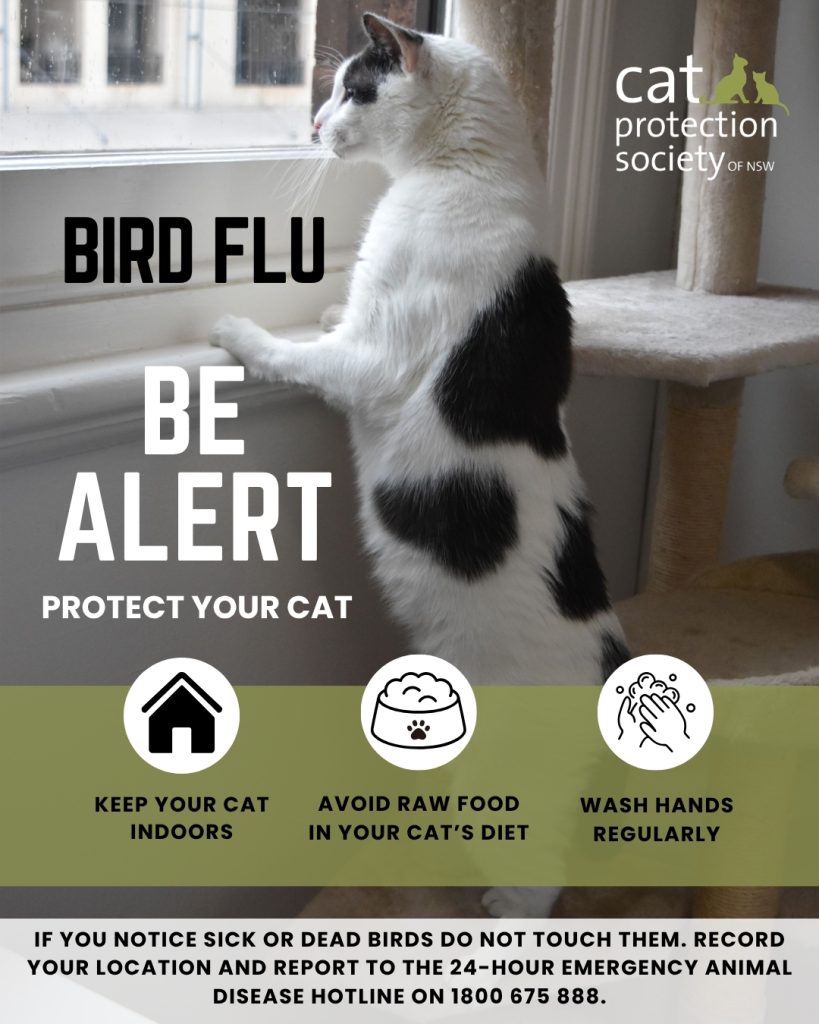
With a growing number of cases detected in Australia, the threat of bird flu is potentially devastating for birds and wildlife. It is also cause for concern in pets but there are some simple measures you can put in place to protect your feline friend.
While Avian Influenza (H5 bird flu) primarily affects birds, cats are susceptible and can contract the virus through exposure to or eating infected birds and wildlife or by coming into contact with the virus via the environment.
Advice for cat guardians:
- Keep your cats indoors so they do not come into contact with birds or wildlife.
- If allowing outdoor access, make sure your cats are fully contained in secure catios or outdoor enclosures and ensure birds are not roosting close to the enclosure. Keep any food and water bowls away from where bird droppings could get in.
- Make sure your cat isn’t sharing water or food bowls with any birds or wildlife.
- Avoid any raw food (including human-grade foods) and unpasteurised milk in your cat’s diet. Freezing does not kill the virus.
- Practice good hygiene and wash hands regularly. If you have walked through bird droppings take your shoes off before going inside.
- Keep an eye on the situation in your local area so that you can manage risk and follow advice.
Signs of bird flu to look out for:
- Flu symptoms such as sneezing, watery eyes, difficulty breathing
- Lethargy or weakness
- Loss of appetite
- Fever
- Neurological signs – tremors or seizures
- Ataxia – loss of balance
If you suspect your cat may have contracted bird flu, act fast as symptoms can worsen quickly with health deteriorating rapidly. Overseas cases of feline infection have shown high fatality. Phone your vet immediately to notify them of your cat’s condition and the associated risks of bird flu.
It’s important to report!
If you notice sick or dead birds or other animals showing signs of bird flu, you should not touch them or get too close. Record your location and report multiple sick or dead birds or other animals to the 24-hour Emergency Animal Disease Hotline on 1800 675 888.
For more information and helpful links visit the Australian Government website: Bird flu (Avian influenza) – DAFF
The NSW Department of Primary Industries and Regional Development has a range of resources, including this factsheet on how to keep your birds and chickens safe: Backyard Chicken and Bird Keepers – Know the signs